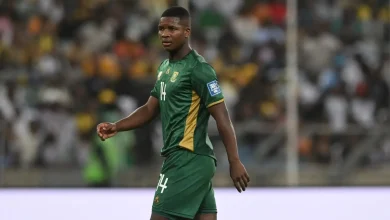
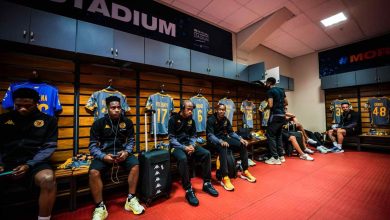
Raymond Mdaka’s work with South Africa’s junior national teams has entered a new phase. After guiding Amajita to the 2025 U20 Africa Cup of Nations title, helping the team reach the FIFA U20 World Cup, and leading South Africa to a third consecutive COSAFA U20 crown in September 2026, Mdaka is also overseeing the country’s U23 side as it begins its campaign towards the Los Angeles 2028 Olympic Games.
The latest COSAFA success came on 27 September 2026, when South Africa defeated hosts Mozambique 2-1 in Maputo. The victory not only retained the regional title but also secured Amajita’s place at the 2027 U20 AFCON in Ghana, where South Africa will arrive as defending champions.
Mdaka’s responsibilities now extend beyond the U20 age group. South Africa’s U23 team is already preparing for the qualification route to the 2028 Olympics, with Mdaka having been appointed to lead the side and having already conducted selection and preparation camps.
Amajita’s rise under Mdaka
The foundations of Mdaka’s current reputation were built through a series of significant results with Amajita.
In 2024, South Africa won the COSAFA U20 Championship by beating Zambia 2-0 in the final. It was the country’s ninth title in the competition at the time.
The following year brought a much bigger breakthrough.
South Africa won its first-ever U20 Africa Cup of Nations title in May 2025, defeating Morocco 1-0 in the final in Cairo. Gomolemo Kekana scored the decisive goal in the second half.
The continental triumph also earned South Africa a place at the 2025 FIFA U20 World Cup in Chile. FIFA confirmed that South Africa qualified for the global tournament alongside Morocco, Egypt and Nigeria as Africa’s four representatives.
That sequence gave Amajita experience at regional, continental and global level.
Another COSAFA title in 2026
South Africa’s latest regional success came in September 2026.



Amajita entered the COSAFA U20 tournament as defending champions and completed the competition with five wins from five matches. In the final, played in Maputo on 27 September, South Africa beat Mozambique 2-1. Oarabile Booysen and Steven Mendes scored for South Africa.
The victory represented another important step in the development programme because the regional tournament also served as a route into the following year’s continental championship.
By reaching the final, South Africa secured qualification for the 2027 U20 AFCON in Ghana before going on to win the regional trophy.
For Mdaka, the immediate U20 challenge is therefore not finished. Amajita will now prepare to defend the continental title they won in Egypt in 2025.
The U23 assignment is already under way
While Mdaka continues his involvement with Amajita, he has also taken charge of the South African U23 national team.
The U23 programme is centred on the qualification route to the Los Angeles 2028 Olympic Games. In July, Mdaka explained that the team had begun preparations for the Olympic qualifying campaign and assembled a 33-player selection group.
The U23 programme is therefore not simply a future possibility. It is already an active national-team responsibility.
In September, Mdaka named a U23 squad for two international friendlies against Algeria, scheduled for 30 September and 3 October in Durban.
The squad includes several players familiar from the U20 setup, reflecting the connection between the two development levels.
Why the U20-to-U23 pathway matters
One of the most important features of Mdaka’s current assignment is the opportunity to continue working with players as they progress through the national-team system.
The U23 squad has been built partly around players who were involved with the U20 side that won the continental title and competed at the FIFA U20 World Cup. Mdaka said earlier in 2026 that the U23 group was being formed around those players while also looking at footballers who had not previously been part of the national-team setup.
That creates continuity between the age groups.
Players who have already experienced international football at U20 level can potentially carry that experience into the U23 environment, while the coaching staff can assess a wider pool of players competing in South Africa’s professional leagues.
The Olympic qualification challenge
The U23 programme has a specific long-term objective: reaching the 2028 Olympic Games in Los Angeles.
The qualification route runs through the African U23 competition structure. Current reporting on the qualification process indicates that the African qualifiers lead towards the U23 AFCON, with the tournament providing the route to the Olympics.
That gives Mdaka a different type of challenge from the U20 competitions.
At U20 level, his immediate priorities have included developing young players and competing in COSAFA and CAF competitions. With the U23 team, the programme is tied directly to Olympic qualification and requires building a squad capable of progressing through a longer qualification process.
From regional success to a broader development pathway
Mdaka’s recent record has placed significant attention on South Africa’s junior national teams.
The 2025 U20 AFCON victory was historic because it gave Amajita their first continental title.
The 2026 COSAFA triumph then extended South Africa’s regional dominance, with the team retaining the championship for a third consecutive year.
The next stage is more complicated.
The U20 team must prepare for the 2027 AFCON in Ghana, while the U23 side is working towards Olympic qualification. Both programmes require player development, squad selection and sufficient preparation time.
Mdaka himself has stressed the importance of preparation ahead of the next U20 AFCON, saying the team needs more time to prepare for the continental tournament.
What comes next for Mdaka?
The immediate calendar illustrates the scale of the assignment.
Amajita have just returned from Mozambique after winning the COSAFA title and securing qualification for the 2027 U20 AFCON. The U23 side, meanwhile, is preparing for its two matches against Algeria at the end of September and beginning of October.
The U20 team will subsequently turn its attention towards Ghana and the defence of its continental crown.
For the U23 side, the focus is the Olympic qualification pathway and the development of a squad capable of competing for a place at Los Angeles 2028.
The two responsibilities give Mdaka an unusually broad role within South Africa’s youth national-team structure.
A development story beyond the trophies
The most significant part of Mdaka’s recent work is not simply the number of trophies attached to his name.
His teams have provided a pathway through which young South African players have gained experience at COSAFA, AFCON and FIFA World Cup level. Several of those players are now appearing in the U23 setup, giving the national development system an opportunity to build continuity between age groups.
That pathway will now be tested at a higher level.
Amajita have a continental title to defend in Ghana, while the U23 side has an Olympic qualification campaign ahead.
For Mdaka, the next chapter is therefore less about looking back at the trophies already won and more about managing two development programmes with different competitions, age groups and objectives.
Sources
This article was independently written using information from CAF, COSAFA and South African sports reporting. Key results and tournament qualification claims were checked against CAF and COSAFA’s published reports.
Editorial policy
Our sports reporting aims to provide factual, independently written coverage using primary sporting bodies and reputable reporting where available. We distinguish confirmed results and appointments from commentary or future possibilities.
Corrections policy
If a material factual error is identified, it will be checked against the relevant football governing body or other authoritative source and corrected. Significant corrections will be clearly reflected in the article.
Disclaimer
Future fixtures, qualification arrangements, squads and tournament schedules can change. This article does not predict the outcome of South Africa’s Olympic qualification campaign or future competitions. Readers should verify the latest fixture and competition information with SAFA, CAF and COSAFA.